 가락전자[KARAK]
 극동음향
극동음향 네이티브인스트루먼트[NI]
 노베이션[NOVATION]
 디비[DB]
 디케이사운드[DKSOUND]
 로드[RODE]
 르윗[LEWITT]
 미프로[MIPRO]
 엠시즈[MSEIZE]
 매키[MACKIE]
 몬스터[MONSTER]
 블루[BLUE]
 베링거[BEHRINGER]
 보스[BOSE]
 슈퍼럭스[SUPERLUX]
 샘슨[SAMSON]
 삼주전자[SAMJOO]
 슈어[SHURE]
 스와니[SWANY]
 스테인버그[STEINBERG]
 오디오테크니카[AUDIO-TECHNICA]
 아포지[APOGEE]
 야마하[YAMAHA]
 타투리아[ARTURIA]
 인프라소닉[INFRASONIC]
 아이케이 멀티미디어[IK MULTIMEDIA]
 아이릭[IRIG]
 이브오디오[EVE AUDIO]
 엠오디오[M-AUDIO]
 오디오프로브[AUDIOPROBE]
 엔터그레인[ENTERGRAIN]
 에이케이지[AKG]
 이더블유아이[EWI]
 알엠이[RME]
 에펠[AEPEL]
 제이티에스[JTS]
 제이비엘[JBL]
 준성테크[JUNSUNG]
 클라이막스[CLAIMAX]
 케이알케이[KRK]
 타스컴[TASCAM]
 티악[TEAC]
 탁스타[TAKSTAR]
 토스오디오[TOSAUDIO]
 프리소너스[PRESONUS]
 포커스라이트[FOCUSRITE]
 프로메인[PROMAIN]
 폭스[FOX]
 프린스자[PRINCE ELEC]
 프로펠러헤드[PROPELLERHEAD]
 포스텍스[FOSTEX]
 하케[HARTKE]AUDIO-TECHNICAAPOGEEARTURIAAEPELAKGAUDIOPROBEBLUEBEHRINGERBOSE
 bmbCLIMAXDBDK SOUNDEVE AUDIO
 ESIEWIFOCUSRITEFOSTEXFOX
 GENELEC
 GNSHARTKE
 HOSA CABLEINFRASONICIK MULTIMEDIAIRIGJTSJBLJUNSUNG TECHKARAKKRKLEWITTMSEIZEMONSTERMIPROMACKIENATIVE INSTRUMENTSNOVATIONPRESONUSPROMAINPROPELLEHEADRODERMESUPERLUXSHURESAMSONSAMJUOOSWANYTASCAMTEACTAKSTARTOSAUDIO
 TRAKTOR
 VASCOMVICBOSS



| 상품명 | Waves Mercury 웨이브즈 머큐리 플러그인 번들 믹스 믹싱 필수 끝판왕 소프트웨어 |
|---|---|
| 판매가 | 3,373,700원 |
| 적립금 | 3,373원 (0.10%) |
| 수량 |   |
| SNS 상품홍보 |   |
|---|

| 이메일 주소 입력 꼭 해주세요! [필수] | (0/100) |
|---|---|
 |
|
(최소주문수량 1개 이상 / 최대주문수량 0개 이하)
사이즈 가이드 수량을 선택해주세요.
위 옵션선택 박스를 선택하시면 아래에 상품이 추가됩니다.
| 상품명 | 상품수 | 가격 |
|---|---|---|
| Waves Mercury 웨이브즈 머큐리 플러그인 번들 믹스 믹싱 필수 끝판왕 소프트웨어 |


|
3373700 ( 3373) 3373)
|
| 총 상품금액(수량) : 0 (0개) | ||






고액결제의 경우 안전을 위해 카드사에서 확인전화를 드릴 수도 있습니다. 확인과정에서 도난 카드의 사용이나 타인 명의의 주문등 정상적인 주문이 아니라고 판단될 경우 임의로 주문을 보류 또는 취소할 수 있습니다.
무통장 입금은 상품 구매 대금은 PC뱅킹, 인터넷뱅킹, 텔레뱅킹 혹은 가까운 은행에서 직접 입금하시면 됩니다.
주문시 입력한 입금자명과 실제입금자의 성명이 반드시 일치하여야 하며, 7일 이내로 입금을 하셔야 하며 입금되지 않은 주문은 자동취소 됩니다.
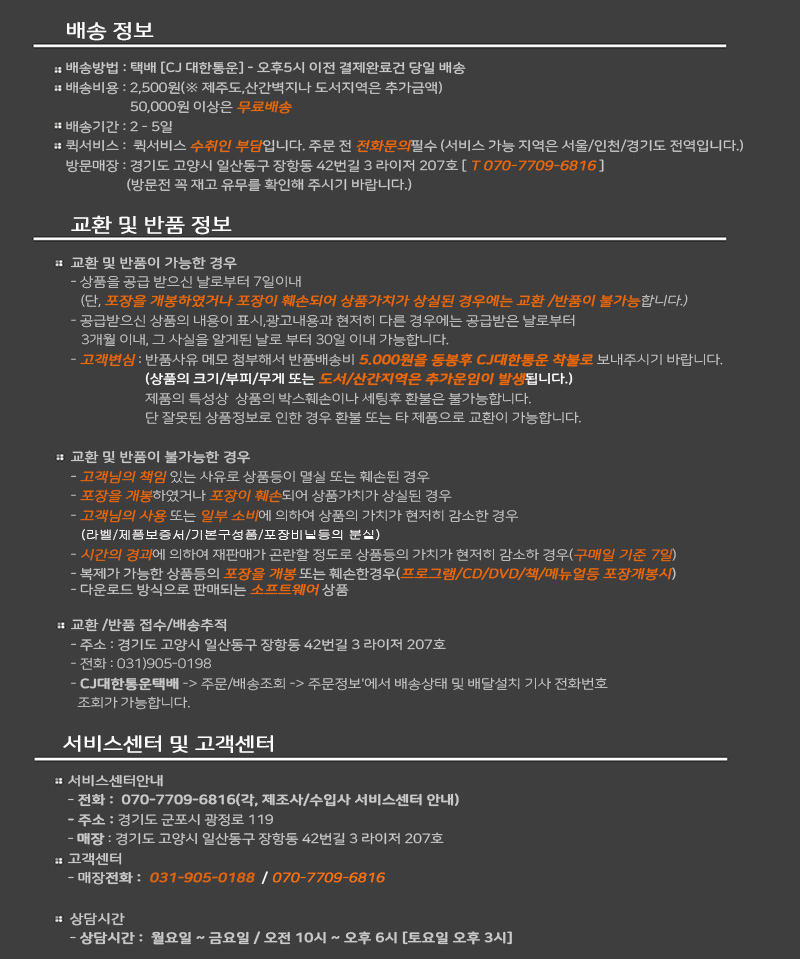
배송 방법 : 택배
배송 지역 : 전국지역
배송 비용 : 무료
배송 기간 : 3일 ~ 7일
배송 안내 : - 산간벽지나 도서지방은 별도의 추가금액을 지불하셔야 하는 경우가 있습니다.
고객님께서 주문하신 상품은 입금 확인후 배송해 드립니다. 다만, 상품종류에 따라서 상품의 배송이 다소 지연될 수 있습니다.
교환 및 반품이 가능한 경우
- 상품을 공급 받으신 날로부터 7일이내 단, 가전제품의 경우 포장을 개봉하였거나 포장이 훼손되어 상품가치가 상실된 경우에는 교환/반품이 불가능합니다.
- 공급받으신 상품 및 용역의 내용이 표시.광고 내용과 다르거나 다르게 이행된 경우에는 공급받은 날로부터 3월이내, 그사실을 알게 된 날로부터 30일이내
교환 및 반품이 불가능한 경우
- 고객님의 책임 있는 사유로 상품등이 멸실 또는 훼손된 경우. 단, 상품의 내용을 확인하기 위하여 포장 등을 훼손한 경우는 제외
- 포장을 개봉하였거나 포장이 훼손되어 상품가치가 상실된 경우 ( 예 : 가전제품, 식품, 음반 등, 단 액정화면이 부착된 노트북, LCD모니터, 디지털 카메라 등의 불량화소에 따른 반품/교환은 제조사 기준에 따릅니다. )
- 고객님의 사용 또는 일부 소비에 의하여 상품의 가치가 현저히 감소한 경우 단, 화장품등의 경우 시용제품을 제공한 경우에 한 합니다.
- 시간의 경과에 의하여 재판매가 곤란할 정도로 상품등의 가치가 현저히 감소한 경우
- 복제가 가능한 상품등의 포장을 훼손한 경우 (자세한 내용은 고객만족센터 1:1 E-MAIL상담을 이용해 주시기 바랍니다.)
※ 고객님의 마음이 바뀌어 교환, 반품을 하실 경우 상품반송 비용은 고객님께서 부담하셔야 합니다. ( 색상 교환, 사이즈 교환 등 포함 )
환불시 반품 확인여부를 확인한 후 3영업일 이내에 결제 금액을 환불해 드립니다.
신용카드로 결제하신 경우는 신용카드 승인을 취소하여 결제 대금이 청구되지 않게 합니다.
(단, 신용카드 결제일자에 맞추어 대금이 청구 될수 있으면 이경우 익월 신용카드 대금청구시 카드사에서 환급처리 됩니다.)
서비스 문의안내 내용
게시물이 없습니다


게시물이 없습니다







Dawlat Al Islam Qamat Archive: Unveiling the Mystique of an Ancient Islamic State
The Dawlat Al Islam Qamat Archive is a treasure trove of historical documents and records that shed light on the intricacies of an ancient Islamic state. The term "Dawlat Al Islam Qamat" roughly translates to "the establishment of the Islamic state," and the archive serves as a testament to the rich history of Islamic governance.
What is the Dawlat Al Islam Qamat Archive?
The Dawlat Al Islam Qamat Archive is a comprehensive collection of manuscripts, letters, and documents that date back to the early days of Islamic civilization. The archive is believed to have originated in the 8th century, during the reign of the Abbasid Caliphate, which marked the beginning of the Islamic Golden Age.
The archive contains a vast array of materials, including:
Significance of the Dawlat Al Islam Qamat Archive
The Dawlat Al Islam Qamat Archive holds immense significance for historians, scholars, and researchers. It:
Challenges and Preservation Efforts
The Dawlat Al Islam Qamat Archive faces challenges related to preservation, accessibility, and authentication. Many of the documents are fragile, and their condition requires careful conservation. Furthermore, the archive's contents are often fragmented, and some documents have been lost or destroyed over time.
Efforts are underway to:
Conclusion
The Dawlat Al Islam Qamat Archive is a treasured repository of Islamic history and culture. As a testament to the rich heritage of Islamic civilization, it continues to inspire research, scholarship, and fascination. As preservation efforts continue, the archive will remain an invaluable resource for understanding the complexities of Islamic governance, intellectual history, and cultural achievements.
The "Dawlat Al Islam Qamat Archive" primarily refers to digital collections preserving one of the most significant pieces of propaganda from the modern jihadi era: the nasheed "Dawlat al-Islam Qamat"
(The Islamic State Has Been Established). Often described as the "unofficial anthem" of the Islamic State (ISIL), this 2013 vocal chant became a global cultural phenomenon and a focal point for digital archivists and counter-terrorism analysts. The Anthem of a Proto-State Released in December 2013 by the Ajnad Media Foundation , the song—also known by its English title "My Ummah, Dawn Has Appeared"
—marked a shift in extremist media production. Unlike previous jihadi nasheeds, it utilized high-quality production values while strictly adhering to an a cappella format to comply with certain interpretations of Islamic law. Influential Reach : In 2014, The New Republic
famously labeled it the "most influential song of the year" due to its ubiquity in propaganda videos and its role in forging a distinct identity for the group. Sonic Composition
: The track features no musical instruments, instead using layered vocals and sound effects like clashing swords, marching feet, and gunfire to create a rhythmic, militaristic atmosphere. The Role of Digital Archives
Because major social media platforms and hosting sites actively remove this content under "violent extremist" policies, the "Archive" exists across specialized repositories like the Internet Archive and various researcher-run databases. Preservation for Research Dawlat Al Islam Qamat Archive
: These archives allow historians and political scientists to study the group’s recruitment strategies and the "Bedouin Arabic" dialects used in later versions, such as the 2016 release "Qamat al-Dawla". Global Adaptations
: Archivists have tracked the song's spread to affiliates like Boko Haram in Nigeria and even documented a Chinese-language version, "We are the Mujahid"
, released in 2015 to target specific regional demographics. Historical Significance
While "Dawlat Al Islam Qamat" is synonymous with a specific extremist movement, its archival presence highlights a broader tension in digital history: the challenge of documenting "dark history" without amplifying its message. To researchers, it remains a primary source for understanding how a non-state actor used digital media to claim the legitimacy of a historical caliphate—contrasting the modern "proto-caliphate" with the scholarly "Golden Age" of the Abbasid Caliphate often cited in Islamic history. Ya Dawlat Al Islam : Free Download, Borrow, and Streaming Software. Internet Arcade Console Living Room. Internet Archive
"Dawlat Al Islam Qamat" Archive refers to a collection of media—primarily the jihadist (chant) of the same name—produced by the Ajnad Media Foundation . While "Dawlat Al Islam Qamat" translates to "The Islamic State Has Been Established" , it is also widely known by its opening lyrics, "My Ummah, Dawn Has Appeared"
This guide provides context for the media found within these archives, often used for academic research and counter-terrorism analysis. De Gruyter Brill 1. Understanding the Core Media The Nasheed : Released in December 2013, this chant became the unofficial anthem of the Islamic State. Soundscape
: It is distinct for its lack of musical instruments, instead using sound effects such as sword unsheathing feet stomping to emphasize its message. Production : Produced by the Ajnad Media Foundation
, which specializes in high-quality vocal audio meant to evoke a "messianic" quality in fighters. 2. Archival and Research Context
Digital archives of this material are monitored by security firms and academic institutions to understand radicalization and propaganda strategies. The "ISIS Archive" Concept : Scholars describe an "imagined museum"
where supporters and unwitting opponents alike act as curators, preserving propaganda that exists across the amorphous terrain of the internet. Research Databases : Organizations like the Institute for Strategic Dialogue (ISD)
have identified archives containing over 90,000 unique items used to replenish extremist content online. Academic Use : These archives are essential for quantitative studies
that track media production volume against real-world events. 3. Themes and Global Reach
The digital landscape of the mid-2010s was haunted by a specific melody. It wasn't a chart-topper, but a rhythmic, auto-tuned chant that signaled the arrival of "Dawlat Al Islam Qamat,"
the primary anthem of the Islamic State. Today, that anthem exists largely as a ghost in the machine—an of a dark era in internet history. The Digital Siege
In the early days of the caliphate’s rise, the archive wasn't a dusty basement; it was a decentralized network
. Every time a platform like YouTube or Twitter deleted a video featuring the chant, ten "mirror" links appeared on Telegram or obscure file-sharing sites. This was propaganda as a virus , designed to be impossible to fully purge. The Archivists
The story of this archive is actually a tale of two opposing groups: The Radicalizers: Dawlat Al Islam Qamat Archive: Unveiling the Mystique
They sought to preserve the media to maintain a "digital caliphate" long after their physical territory was lost, using the archive as a recruitment tool [5, 6]. The Intelligence Analysts:
Counter-terrorism researchers and OSINT (Open Source Intelligence) hobbyists became the accidental librarians of this content [2]. They archived the videos and chants not for glory, but to track forensic details
—identifying executioners, mapping locations, and understanding the group's psychological warfare [2, 4]. A Fragmented Legacy
By 2017, the "Great Purge" by major tech companies pushed these archives into the
and encrypted silos [5, 7]. What remains of "Dawlat Al Islam Qamat" in the public eye are mostly academic snippets or warning labels in digital safety databases [3]. The archive serves as a grim reminder of how algorithmic amplification
once allowed a single chant to echo across the globe, and the ongoing struggle of "digital janitors" who work to ensure that while the history is remembered, the siren song is never re-amplified [1, 6]. modern AI moderation
tools are being trained to identify and block these specific audio signatures?
The origins of the archive can be traced to the Islamic State’s media foundation, the Al-Furqan Foundation for Media Production. As the group seized territory in Iraq and Syria in 2013–2014, the volume of output skyrocketed.
For journalists, sociologists, and national security analysts, the archive is more than a collection of hate speech. It is a primary source document tracking the evolution of extremist propaganda. Preserving the Dawlat Al Islam Qamat Archive (ethically, through official channels at places like West Point’s Combating Terrorism Center or George Washington University’s Program on Extremism) allows scholars to analyze:
The "Dawlat Al Islam Qamat Archive" did not start as a formal project. After the territorial collapse of ISIS in 2017-2019, major platforms (YouTube, Twitter, SoundCloud, and Audiomack) launched aggressive content removal campaigns. Entire libraries of jihadi media were wiped out. In response, sympathizers created "backup machines."
The Archive refers to three distinct layers of preservation:
The Islamic State (ISIS/ISIL): A militant Sunni Islamist extremist group that has been involved in significant conflicts in the Middle East. They proclaimed the establishment of a caliphate, or Islamic state, in 2014, drawing on historical precedents.
Historical Islamic States: Throughout history, various Islamic states have been established, each with its own archives of documents, decrees, and records. These could include the Rashidun Caliphate, Umayyad Caliphate, Abbasid Caliphate, and the Ottoman Empire, among others.
The phrase Dawlat Al Islam Qamat ("The Islamic State Has Risen") originates from a nasheed (Islamic chant) popularized by the Islamic State (IS/ISIS/ISIL). It became an anthem for the group and a branding mechanism for their media productions. The "archive" associated with this title represents one of the most extensive and sophisticated propaganda operations in the history of modern terrorism.
Unlike previous terrorist organizations that relied on sporadic video releases, IS institutionalized media production. The Dawlat Al Islam Qamat archive refers to the systematic cataloging of videos, photo essays, magazines (such as Dabiq and Rumiyah), and radio broadcasts designed to construct a narrative of statehood, inevitability, and apocalyptic victory. This paper analyzes the structure, content, and strategic intent of this archive, positing that it served as a virtual state infrastructure when the physical caliphate crumbled.
The Dawlat Al Islam Qamat archive is not merely a collection of violent imagery; it is a holistic record of a proto-state. The content can be categorized into four primary pillars:
The crown jewel of the archive is the high-definition video production, most notably the Flames of War series and the "Though the Disbelievers Dislike It" series. These videos utilized drone footage, professional editing, graphics, and slow-motion cinematography. Royal decrees and proclamations : Official documents issued
Dawlat al-Islam Qamat (Arabic: دَوْلَة اُلْإِسْلَامِ قَامَتْ), translated as "The Islamic State Has Been Established," is a jihadist nasheed (an a cappella song) that serves as the unofficial anthem of the Islamic State (ISIL/ISIS).
Released in December 2013 by the Ajnad Media Foundation, it became the group's most recognizable piece of media, often accompanying official propaganda videos and speeches. Key Characteristics
Composition: It is performed a cappella, meaning it uses no musical instruments. Instead, it features sound effects such as the unsheathing of swords, rhythmic feet stomping, and gunfire.
Alternative Titles: In English, it is sometimes referred to as "My Ummah, Dawn Has Appeared" (Arabic: أُمَّتِي قَدْ لَاحَ فَجْرٌ, Ummatī qad la-hā fajrūn).
Cultural Impact: Due to its widespread use in 2014, it was described by magazines like The New Republic as one of the most influential and famous songs of that year. Usage and Archival
The song has been archived across various platforms, including the Internet Archive, though many official hosting sites frequently remove it due to its association with designated terrorist organizations. It has also been used by affiliated groups, such as Boko Haram in Nigeria.
This archive should prioritize survivor dignity, historical accuracy, and prevention of further harm. It aims to preserve material for study while minimizing the risk of inadvertent propaganda amplification.
"Dawlat al-Islam Qamat" is a notorious nasheed (chant) that was released in 2013 and became the official anthem of the Islamic State of Iraq and the Levant (ISIL/ISIS) [1]. Due to its direct association with a designated terrorist organization and its use in violent propaganda, hosting, sharing, or creating a digital "archive" of this material carries severe real-world consequences.
Below is an overview of the legal, security, and ethical implications surrounding the archiving of such content: ⚠️ Legal and Platform Violations
Terrorism Laws: In many jurisdictions, distributing or archiving material produced by ISIS is classified as promoting or assisting a designated terrorist organization, which can lead to criminal prosecution.
Content Moderation: Major tech platforms, web hosts, and file-sharing services have strict Zero-Tolerance policies against hosting terrorist content and will permanently ban accounts or remove sites associated with it. 🔒 Cybersecurity Risks
Malicious Files: Archives of extremist media hosted on unregulated or fringe websites are frequently bundled with malware, spyware, or phishing scripts.
Surveillance: Accessing or downloading known terrorist media often flags IP addresses for monitoring by national security agencies and cyber-intelligence units. 📚 Academic and Research Alternatives
If your interest in this material is strictly for academic, journalistic, or counter-extremism research, you should avoid creating personal archives or accessing unverified sources:
Established Repositories: Use secure, vetted databases maintained by academic institutions or counter-terrorism research centers (such as the Program on Extremism at George Washington University).
Authorized Access: Professional researchers typically access these materials through closed, secure networks to ensure safety and legal compliance.




라인
 공지사항
공지사항 문의하기
문의하기 상품후기
상품후기 포토후기
포토후기 이벤트
이벤트 회원가입
회원가입
 등급안내
등급안내 마이쇼핑
마이쇼핑 고객센터
고객센터 상품검색
상품검색 장바구니
장바구니 관심상품
관심상품 적립금
적립금 쿠폰관리
쿠폰관리 내게시물
내게시물 배송조회
배송조회


 한국어
한국어